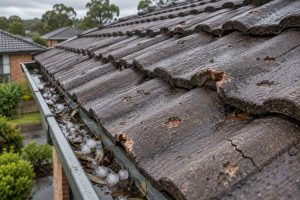
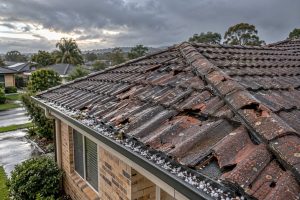
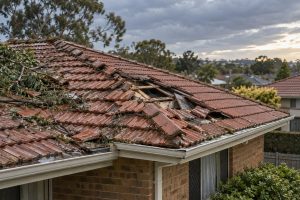
If a hailstorm has just moved through Blacktown or the surrounding suburbs, checking your roof should be near the top of your list once the storm has passed and it is safe to go outside. Hail damage is not always obvious from the ground, and small issues left unchecked can turn into a serious leak the next time it rains. This guide walks through a quick, safe check you can do in about ten minutes without needing to get on the roof yourself.
Before You Start, Stay Safe
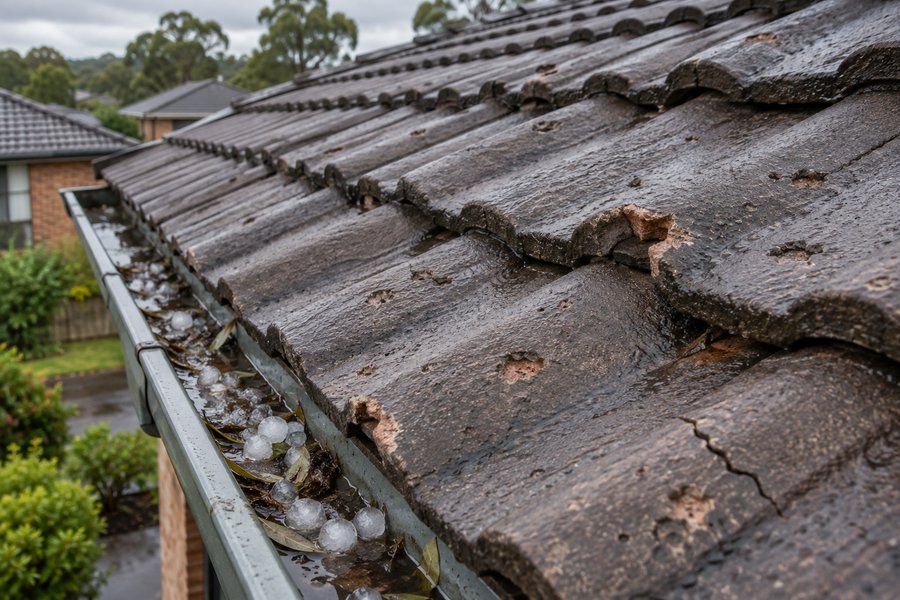
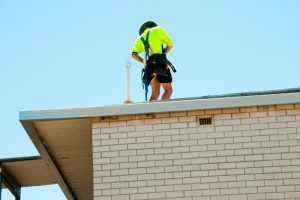
Do not attempt to climb onto your roof after a storm, especially if it is still wet, windy, or if there is any visible structural damage. Most of this check can be done from the ground, from a window, or from inside your roof cavity if you have safe access. If you suspect serious damage, it is always better to call a professional than to inspect it yourself from height.
Minute 1 to 2. Look at the Ground Around Your House
Before looking up, look down. Hail damage often leaves evidence scattered around the property. Check your garden beds, driveway, and lawn for broken pieces of roof tile, granules from Colorbond or metal roofing, or fragments of guttering. Finding debris on the ground is often the first clear sign that your roof took a direct hit.
Minute 3 to 4. Scan the Roofline From the Street
Stand back from your house, ideally from across the street or your front yard, and look along the roofline. You are looking for tiles that appear cracked, chipped, discoloured, or sitting at a different angle to the tiles around them. On a metal or Colorbond roof, look for dents or dimpling, which can be harder to spot but often appear as small shadows or colour changes across the surface.
Binoculars make this step much easier and safer than trying to get a closer look by climbing anything.
Minute 5 to 6. Check Gutters and Downpipes
Hail and storm debris frequently ends up in gutters, and a blocked gutter after a storm can quickly lead to water backing up under the roofline. Look for visible dents along the gutter line, sagging sections, or debris overflowing the edges. If you can safely see into the gutter from a ladder at ground level, check for granule buildup, which often indicates hail impact on the roof above.
Minute 7 to 8. Check Skylights, Vents, and Flashing
These are common weak points during any hailstorm. Skylights can crack or shatter under large hailstones, and the flashing around vents and chimneys can lift or dent on impact. Look closely at these areas for any visible gaps, cracks, or damage, since even a small compromise here can let water through during the next rain.
Minute 9. Check Inside the House
Head inside and check ceilings in every room, particularly rooms directly under any roof area where you noticed damage outside. Look for new stains, damp patches, or bubbling paint. Even a very faint stain is worth noting, since it may only worsen with the next rainfall. Also check your roof cavity if you have access, looking for any visible daylight, damp insulation, or water marks on the timber framing.
Minute 10. Photograph Everything You Find
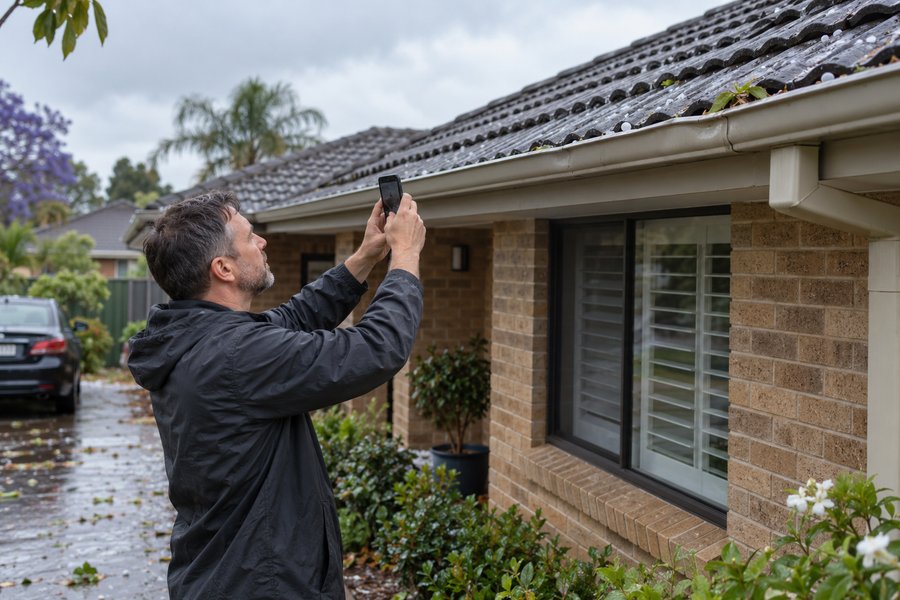
Before moving on to anything else, take clear photos of any damage you noticed during the check, both from the ground and from inside the house. This step matters even if the damage looks minor, since photographic evidence taken soon after the storm is important if you end up needing to file an insurance claim.
What to Do If You Find Damage
If your check turns up cracked tiles, dented gutters, damaged flashing, or any signs of water entering the house, avoid attempting repairs yourself, particularly anything involving the roof surface. Contact a licensed local roofer to carry out a full inspection and provide a proper damage report, which will also support an insurance claim if needed.
Even if your quick check does not turn up obvious damage, it is worth booking a professional inspection after any significant hailstorm. Some damage, particularly hairline cracks in tiles or subtle dimpling on metal roofing, is genuinely difficult to spot from the ground and can still lead to leaks weeks or months later.
Why Acting Quickly Matters
Roof damage rarely gets better on its own. A tile that cracked during a hailstorm but has not yet let water through can still fail completely during the next storm, particularly if wind or further hail puts additional pressure on the weakened area. Checking your roof promptly after a storm, and getting professional help when needed, is the difference between a straightforward repair now and a much larger, more expensive job later.
Get a Professional Inspection After the Storm
If a recent hailstorm has hit your Blacktown home and you want a proper assessment beyond what you can check yourself, our local team offers fast, thorough roof inspections following storm events across Blacktown and western Sydney.
Book a post storm roof inspection today and get a clear picture of any damage before it becomes a bigger problem.